
The Characters' Reactions to Guilt
And Then There Were NoneHow each of the ten characters responds to the accusation of murder, revealing their true nature.
increasing Bearing strength in each event
 decreasing
Bearing strength in each eventdecreasingDenial and Indignation
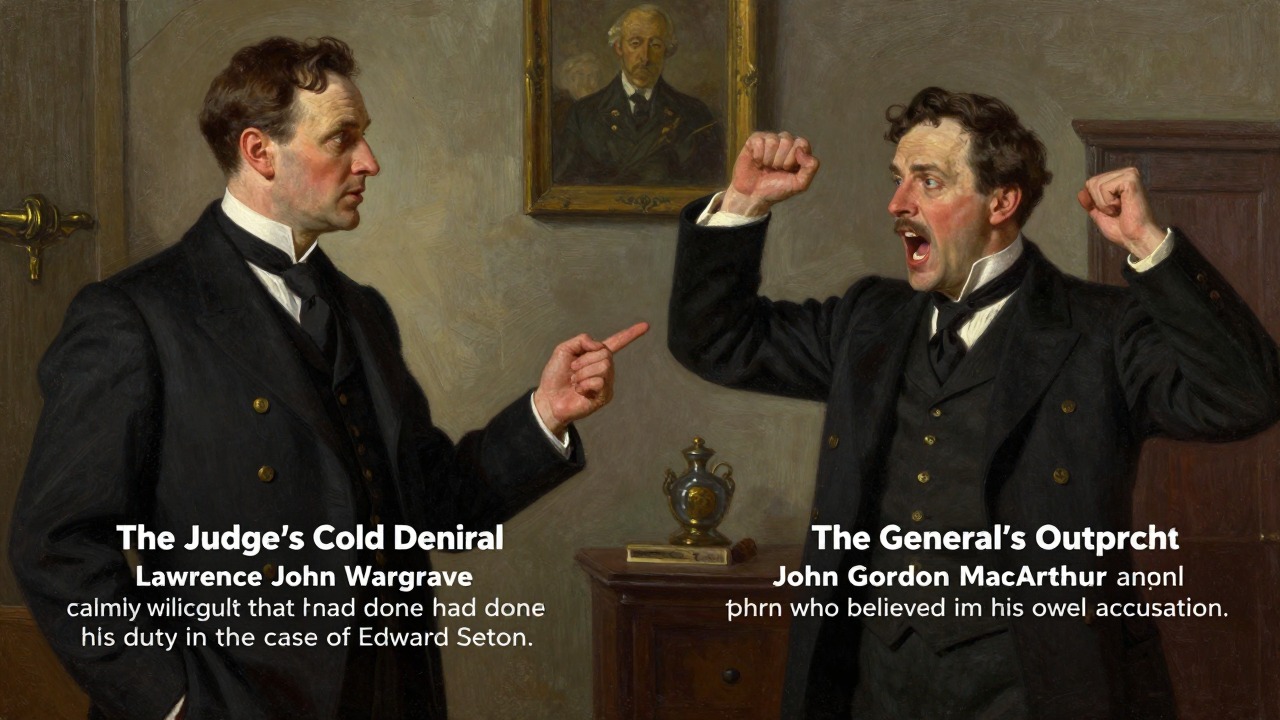
The Defensive Responses
The Judge's Cold Denial
Lawrence John Wargrave calmly stated that he had done his duty in the case of Edward Seton. He showed no emotion. He was a man who believed in his own righteousness.
The General's Outburst
John Gordon Macarthur angrily denied the accusation, but he was shaken. His hand trembled. He was not as sure as he pretended.
The Doctor's Unease
Edward George Armstrong was nervous. He protested too much. He was hiding something.
The Girl's Tears
Vera Elizabeth Claythorne broke down. She was overwhelmed by the public accusation. Her guilt was close to the surface.
The Adventurer's Admission
Philip Lombard laughed and admitted that the story about the natives was true. He showed no remorse. He was a man without a conscience.
The Puritan's Silence
Emily Caroline Brent refused to say anything. She sat rigid, her lips tight. She was above judgment.
The Young Man's Indifference
Anthony James Marston shrugged off the accusation. He said it was an accident. He felt no responsibility.
The Policeman's Bluster
William Henry Blore was angry. He defended his actions as part of his duty.
The Servants' Fear
Thomas Rogers and Ethel Rogers were terrified. They denied everything, but their fear was obvious.
The Confessions
The Truth Emerges
The General's Confession
John Gordon Macarthur told Vera Elizabeth Claythorne that he had sent Arthur Richmond to his death. He admitted it was murder. He seemed relieved to confess.
The Girl's Secret
Vera Elizabeth Claythorne told Emily Caroline Brent about Beatrice Taylor. Emily Brent showed no sympathy. She was hard as stone.
The Adventurer's Story
Philip Lombard told the story of abandoning his men. He did not apologize. He was a survivor.
The Doctor's Guilt
Edward George Armstrong was haunted by the death of Louisa Mary Clees. He had operated while drunk. He was a killer, but he had escaped justice.
The Judge's Satisfaction
Lawrence John Wargrave, in his confession, admitted that he enjoyed the power of life and death. He was the only one who felt no guilt.
August 8th, evening
August 9th-10th
